TL4 Minisymposium brings researchers together to explore biotechnology for a sustainable world
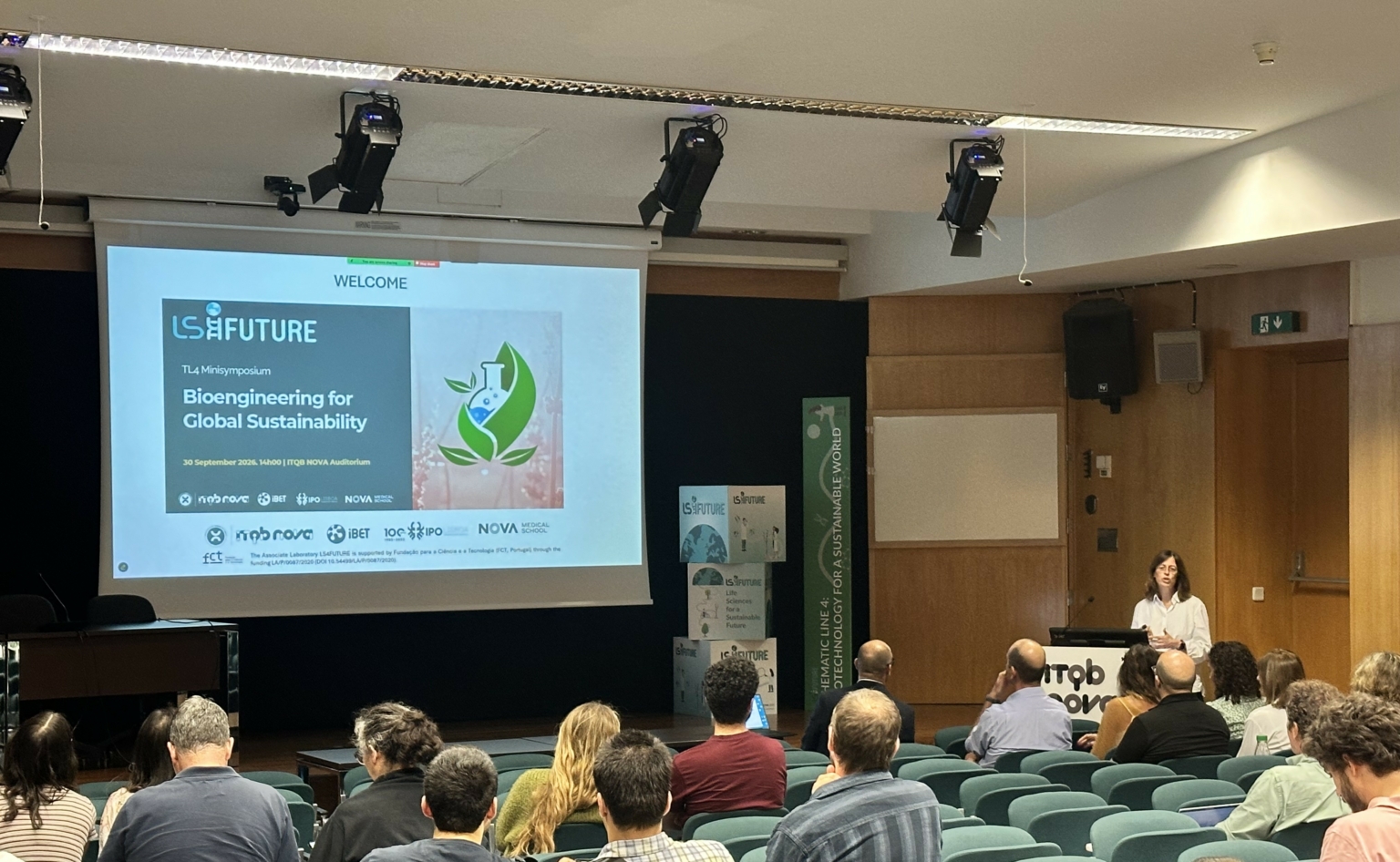
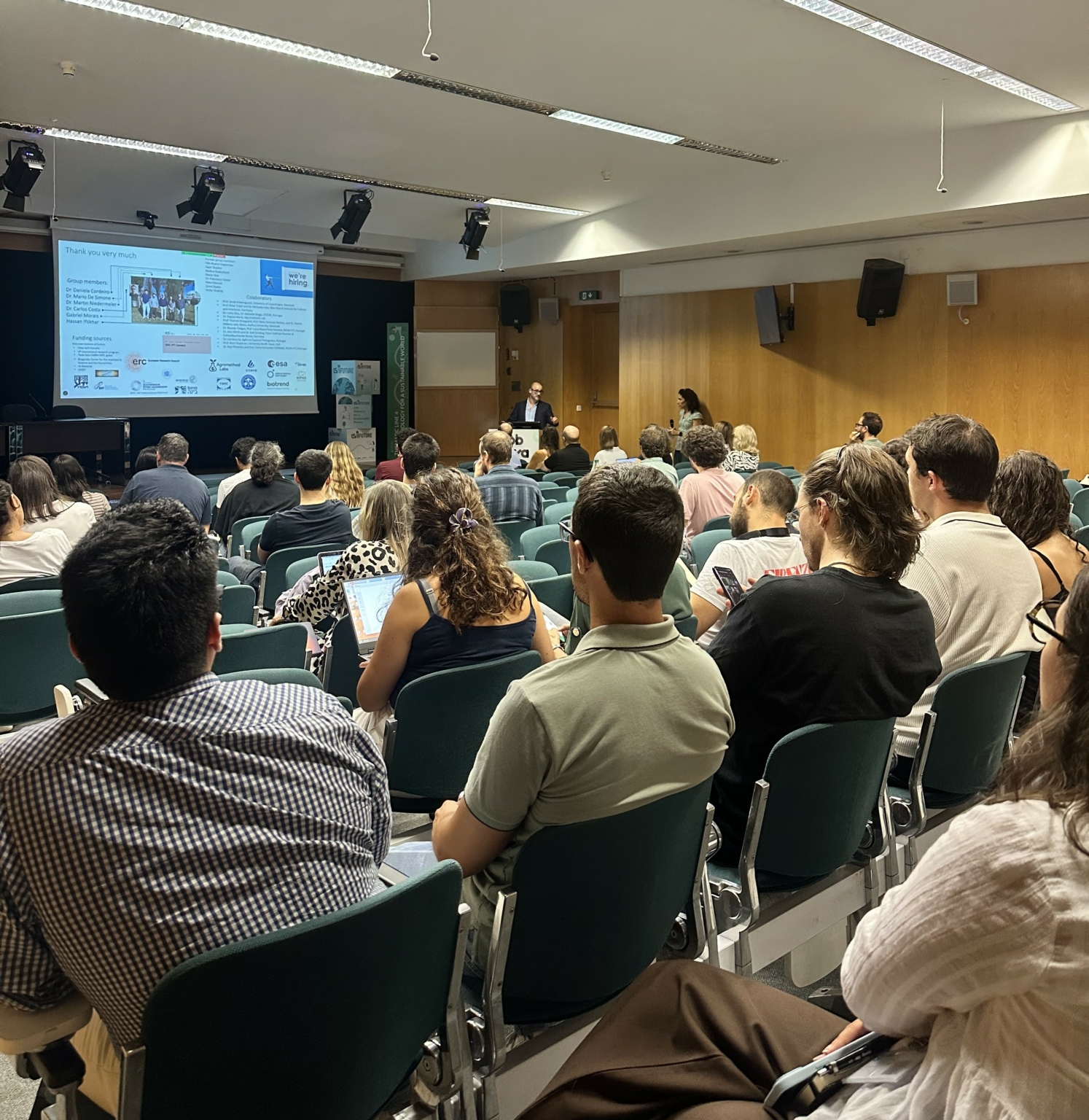
On 30 September, LS4FUTURE hosted the TL4 Minisymposium “Bioengineering for Global Sustainability” at the ITQB NOVA Auditorium, bringing together over 50 researchers for an afternoon of science, discussion and networking focused on how biotechnology can contribute to a more sustainable future.
The event explored a broad range of approaches at the intersection of biotechnology, green chemistry and microbial innovation and the programme showcased how biological systems and engineering can help address environmental and industrial challenges.
The scientific programme featured two keynote lectures. Filipe Natálio (NOVA FCT) discussed the potential of biotechnology to transform the future of textiles, while Bruno Medronho (University of Algarve, MED & Mid Sweden University) shared insights from 15 years of research into biopolymer science and the conversion of agroforestry residues into advanced bio-based materials.
The programme also featured five short talks from LS4FUTURE researchers. Beatriz Royo (ITQB NOVA) presented approaches to green and sustainable synthesis; Inês Cardoso Pereira (ITQB NOVA) discussed biological CO₂ conversion; Juan Ignacio Vílchez (ITQB NOVA) explored the potential of root exudates for next-generation bioinoculants; Cátia Carmo (iBET) presented a green approach to recovering bioactive peptides from olive pomace; and Vânia Brissos (ITQB NOVA) discussed enzyme engineering for lignocellulose processing.
Beyond the scientific presentations, the Minisymposium provided an opportunity for researchers from across the LS4FUTURE community to exchange ideas, discover complementary expertise and explore potential collaborations.
Scientifically organised by Ana Confraria and Nelson Saibo (ITQB NOVA) and Teresa Serra (iBET), the TL4 Minisymposium marked the fourth and final scientific activity in the 2026 LS4FUTURE Minisymposium series.
Across the four events, LS4FUTURE’s Thematic Lines have brought researchers together around diverse areas of life sciences—from advanced imaging and complex disease models to biopharmaceutical innovation and sustainable bioengineering—reinforcing the value of interdisciplinary exchange and collaboration across the Associate Laboratory.
We thank all the speakers, organisers and participants who contributed to making the TL4 Minisymposium a vibrant and inspiring afternoon of science and community.