Demystifying Participation in Horizon Europe Consortia
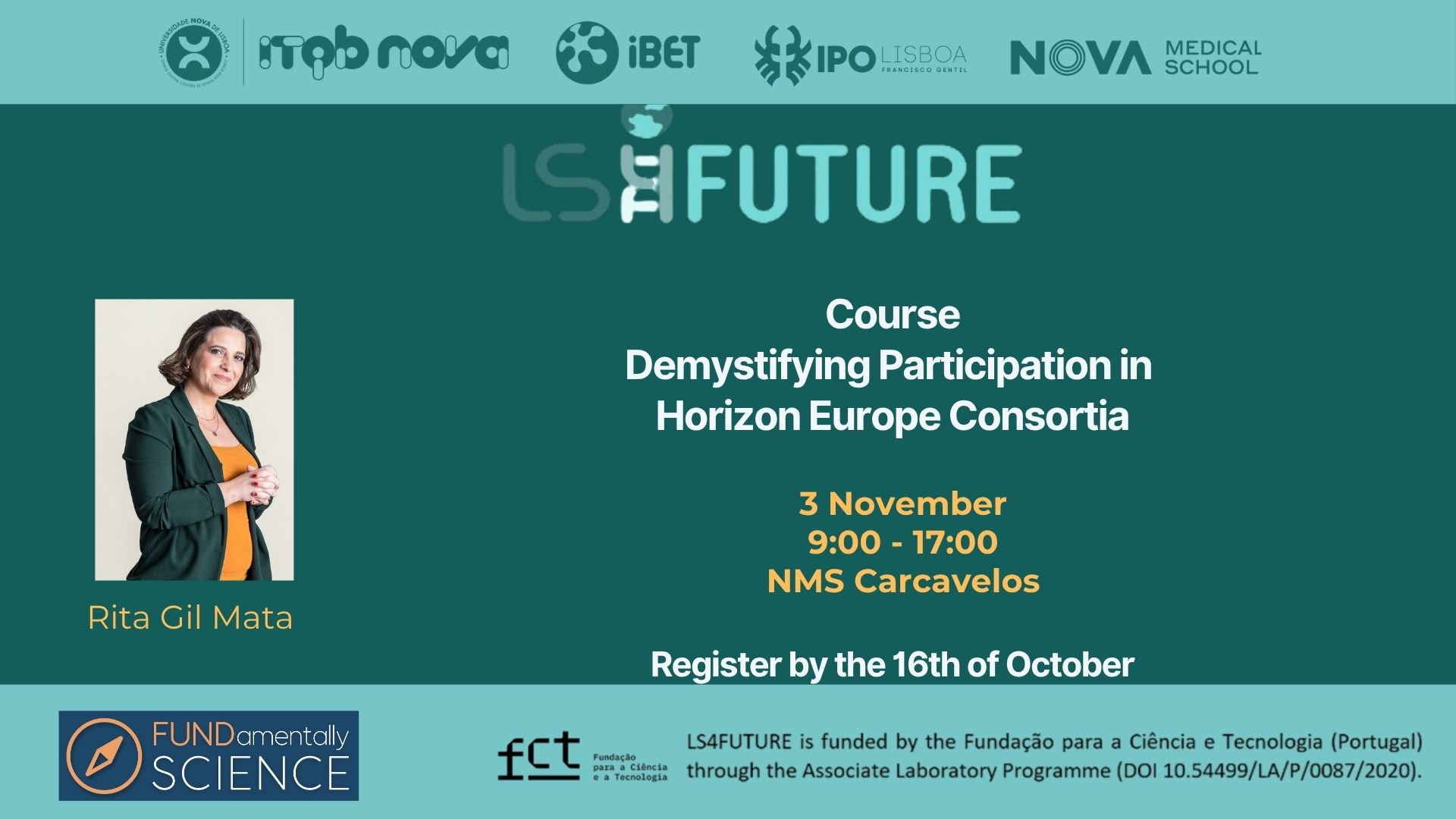
REGISTRATIONS OPEN UNTIL OCTOBER 16 

  • Are European collaborative grants becoming increasingly important for the growth of your research programme?
  • Have you participated in Horizon Europe consortia but would like a more systematic understanding of how to identify the right opportunities and position yourself effectively?

Horizon Europe is the EU’s largest research and innovation programme to date, and a large share of its funding goes to collaborative projects delivered by international consortia. For many research groups, these projects open the door to new partners, new resources and greater international visibility. Yet getting into the right consortium is rarely straightforward: it depends on understanding how the programme is structured, how consortia are formed, and when and how to approach potential partners. Much of this know-how is seldom written down and is usually learned through trial and error.

This course is designed to make that process clearer, more strategic and more effective. Please register here by 16th of October.

 

Horizon Europe: Demystifying Participation in Consortia

This one-day practical course is aimed primarily at principal investigators and senior postdocs who are reaching the stage where participation in European collaborative funding is becoming a key part of their research strategy. Research managers are also welcome.

The course, delivered by FUNDamentally SCIENCE, will be tailored to the group via a questionnaire and will provide a structured introduction to the practical realities of joining and contributing to Horizon Europe consortia, covering:

Understanding the landscape Types of Horizon Europe projects and funding instruments, and how they relate to different research and collaboration opportunities.

Understanding consortia Roles, responsibilities, partner dynamics and what is expected from participants in collaborative projects.

Finding the right consortium Practical approaches to identifying relevant opportunities, building connections, conducting outreach and positioning your organisation as a valuable partner.

📅 Tuesday, 3 November 2026

⏱️ One day | Face to face | 9:00 – 17:30

👥 Limited to 20 participants

🏢 NOVA Medical School, Campus de Carcavelos (Parede)

Registration: here until 16 October

What’s included: all training materials, one month of 24/7 access to the Online Learning Platform, a one-hour follow-up Q&A Session one month after the course, and an individual Certificate of Participation.

Detailed Agenda

Tuesday, 3 November 2026 · NMS Campus de Carcavelos · 9:00 – 17:30

Morning session (3.5 hours)

9:00 – 9:20 | Welcome and introductions Course objectives, participant introductions, and key points from the pre-training questionnaire.

9:20 – 10:45 | Understanding the landscape How Horizon Europe is structured: pillars, clusters, missions and partnerships. The main types of actions (Research and Innovation Actions, Innovation Actions, Coordination and Support Actions, MSCA networks) and how they differ from single-beneficiary grants such as the ERC. How to read a work programme and call topic: expected outcomes, scope, impact and technology readiness levels.

10:45 – 11:00 | ☕ Coffee break

11:00 – 12:45 | Understanding consortia The anatomy of a consortium: coordinator, work package leader, partner, associated partner and third parties. Responsibilities during proposal preparation and project implementation. Partner dynamics, communication and decision-making. Introduction to the consortium agreement and intellectual property. What coordinators expect from partners, and what makes a partner valuable.

12:45 – 13:45 | 🍽️ Lunch

Afternoon session (3.5 hours)

13:45 – 15:30 | Finding the right consortium Search strategies using the Funding & Tenders Portal and partner search tools. The role of National Contact Points, networks, brokerage events and European partnerships. Mapping your expertise to upcoming call topics, and the right timing for approaching coordinators.

15:30 – 15:45 | ☕ Coffee break

15:45 – 17:15 | Outreach and positioning your organisation Building connections and presenting your organisation as a valuable partner. Preparing a partner profile and an effective outreach message.

17:15 – 17:30 | Wrap-up and next steps Final Q&A, key takeaways, post-training evaluation, and information on the follow-up Q&A session and Course 2, Preparing a Competitive Proposal (first semester 2027).

Training Methodology

At FUNDamentally SCIENCE, our methodology is grounded in established adult learning research. We combine Knowles’ principles of andragogy – recognizing that adults learn best when building on existing experience – with Vygotsky’s social constructivist approach, where learning happens through interaction with peers and expert guidance.

Delivered through our interactive online collaborative platform, our approach focuses on experience-based learning following Schön’s reflective practice model  – every session begins with participants’ real challenges and current practices. Through structured peer collaboration in small breakout groups, participants engage in what Wenger calls “communities of practice” – learning from colleagues across different countries and research fields while building professional networks.

The distributed learning format (4 weeks rather than intensive blocks) follows Ebbinghaus’ spacing effect research, which demonstrates that spaced repetition and application significantly improve retention and skill transfer. Our collaborative platform enables seamless interaction, engagement, and peer feedback between sessions, allowing participants to apply new concepts and creating the experiential learning cycle that leads to genuine competency development.

Why This Approach Works

Our methodology and exercises are designed from over 20 years of experience training researchers to secure funding. This approach develops three core capabilities:

Strategic Funding Approach: Participants become strategic in identifying and pursuing funding opportunities that align with their research profile, rather than applying randomly to unsuitable calls.

Compelling Proposal Writing: Participants write applications using proven frameworks and techniques that transform technical research into persuasive, reviewer-friendly narratives.

Confident Funding Navigation: Participants understand the funding system, evaluation criteria, and budget requirements, enabling them to approach applications with professional competence.

Your trainer – Rita Gil