LS4FUTURE Awards 2026 Seed Funding to Three Collaborative Projects
7/05/2026

The LS4FUTURE Associate Laboratory is pleased to announce the three selected projects for the 2026 edition of the Seed Funding – Pathway to Larger Grants program. This competitive internal funding scheme supports short, high-impact collaborative projects designed to strengthen applications for major international funding opportunities within the next 12 months.

Aligned with LS4FUTURE’s mission to advance translational and interdisciplinary research, this initiative continues to foster collaboration across institutions and scientific domains, while enabling innovative approaches to address key challenges in One Health.

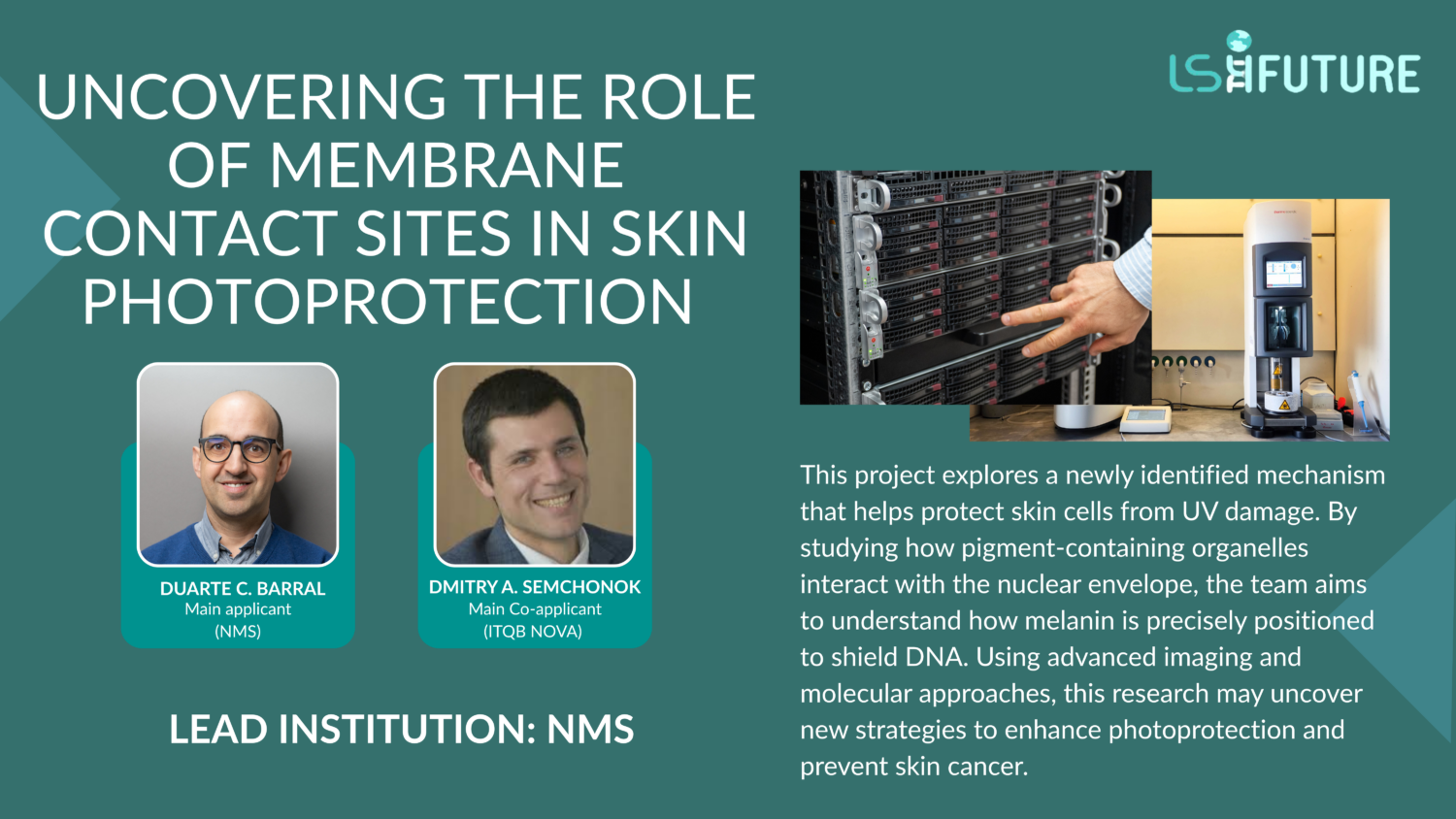
Uncovering the role of membrane contact sites in skin photoprotection

Lead Institution: NMS

Main applicant: Duarte C. Barral

Main Co-applicant: Dmitry A. Semchonok (ITQB NOVA)

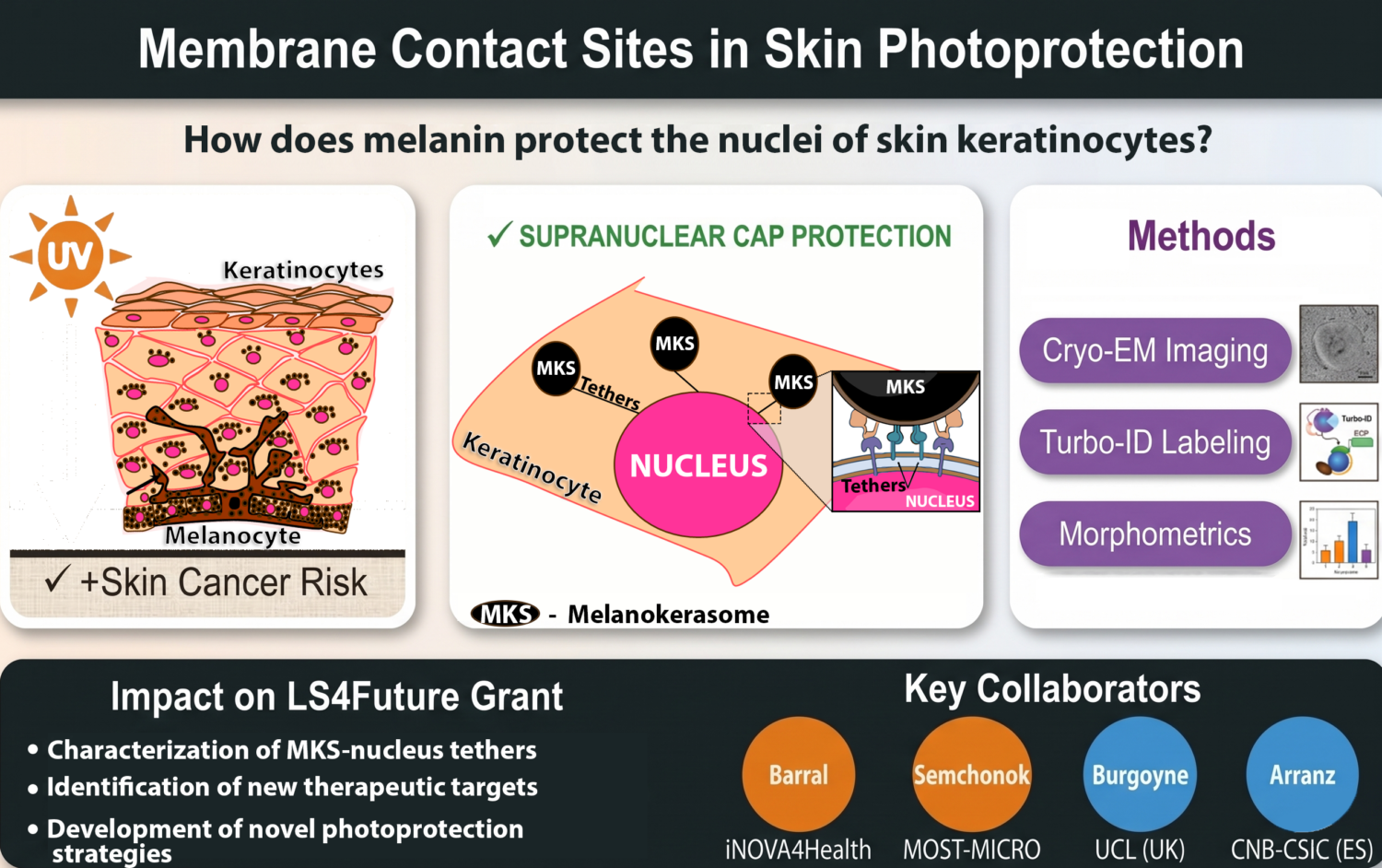
Skin pigmentation plays a critical role in protecting against the harmful effects of UV radiation, primarily through the photopigment melanin. This project explores a newly discovered class of membrane contact sites between the compartments where melanin is stored inside the skin epidermal cells and the nuclear envelope, structures that appear essential for positioning pigment to shield nuclear DNA.

Building on preliminary ultrastructural evidence, the team will combine advanced electron microscopy and molecular biology approaches to characterize these contact sites and identify the molecular machinery involved. By uncovering how these nanoscale interactions regulate photoprotection, the project may open new avenues for modulating skin pigmentation and preventing UV-induced damage, including skin cancer.

This work is further strengthened by international collaborations with experts in membrane contact sites and cryo-electron microscopy, and aligns with LS4FUTURE’s focus on fundamental mechanisms with therapeutic potential.

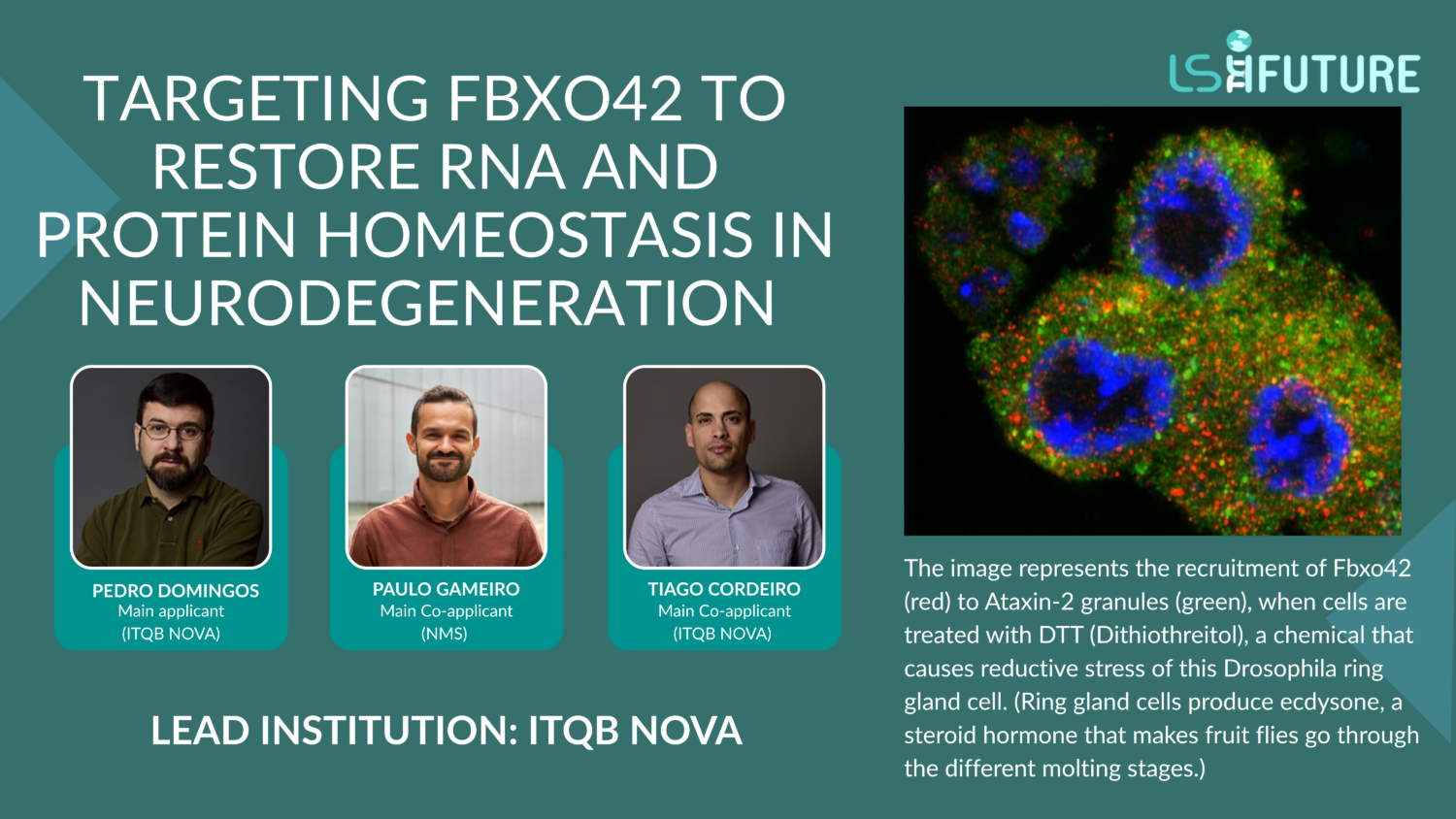
Targeting FBXO42 to Restore RNA and Protein Homeostasis in Neurodegeneration

Lead Institution: ITQB NOVA

Main applicant: Pedro Domingos

Main Co-applicants: Paulo Gameiro (NMS), Tiago Cordeiro (ITQB)

Neurodegenerative diseases such as ALS and spinocerebellar ataxia type 2 are associated with the pathological accumulation of RNA-binding proteins, including Ataxin-2. This project investigates the role of the E3 ubiquitin ligase FBXO42 as a regulator of Ataxin-2 degradation, with the goal of restoring cellular homeostasis.

The team will integrate structural biology techniques (NMR, SAXS), computational drug discovery, and functional validation in cell and organoid models to identify small molecules capable of enhancing FBXO42 activity. In parallel, RNA interactome profiling will shed light on how Ataxin-2 contributes to disease under stress conditions.

By combining mechanistic insight with therapeutic exploration, this project lays the groundwork for a large-scale international consortium proposal and aims to uncover novel strategies to tackle neurodegenerative disorders.

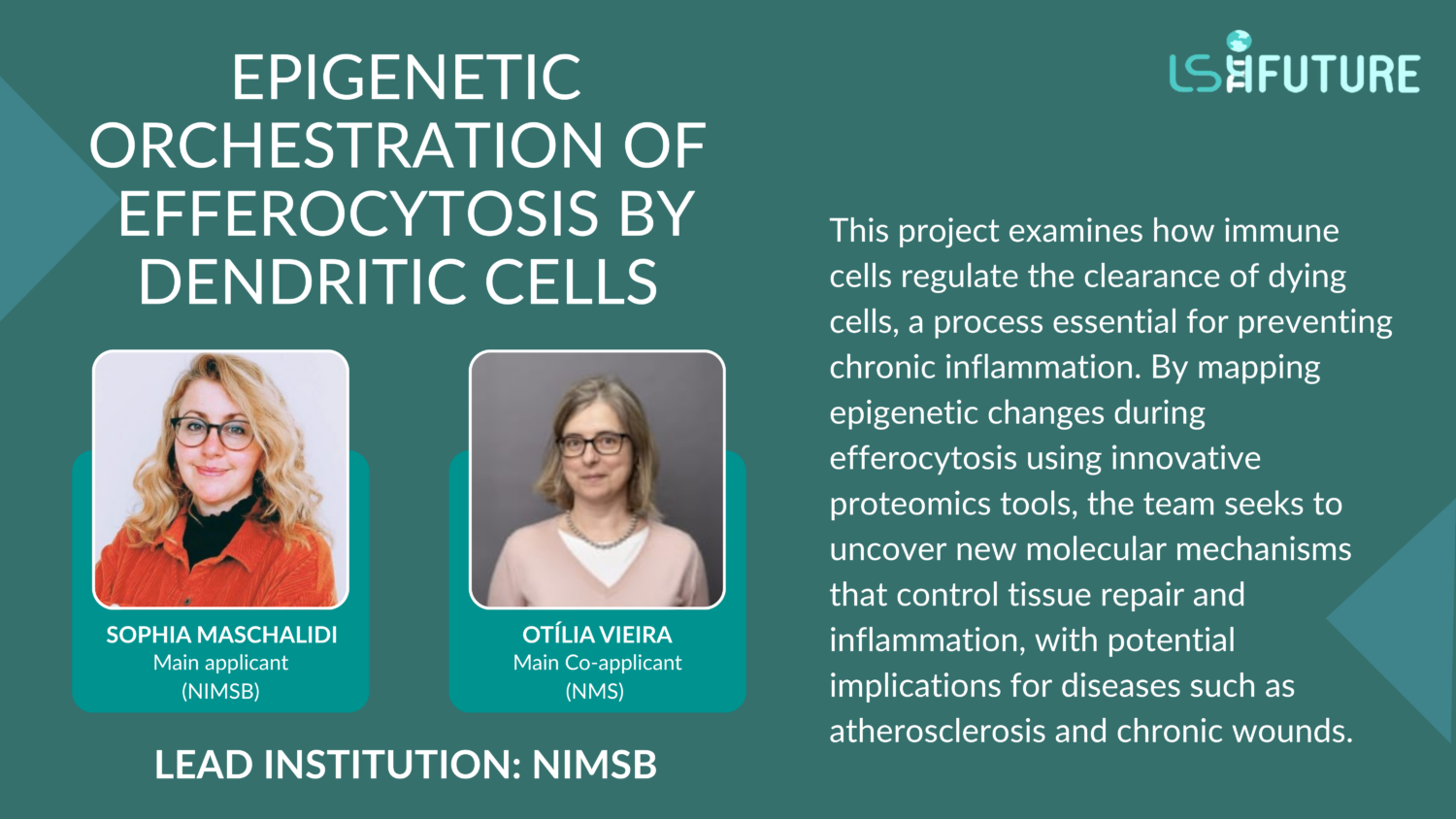
Epigenetic orchestration of efferocytosis by dendritic cells

Lead Institution: NIMSB

Main applicant: Sophia Maschalidi

Main Co-applicant: Otília Vieira (NMS)

Efficient clearance of dying cells (efferocytosis) is essential for tissue homeostasis and the resolution of inflammation. Defects in this process are linked to chronic inflammatory diseases such as atherosclerosis.

While transcriptional changes during efferocytosis are increasingly understood, the underlying epigenetic mechanisms remain largely unexplored. This project will apply a novel proteomics-based approach to map histone modifications and chromatin dynamics in dendritic cells during efferocytosis.

Combining expertise in phagocyte biology, lysosomal function, and multi-omics mass spectrometry, the team aims to define the epigenetic landscape that governs this essential biological process. The findings could reveal new molecular targets for modulating inflammation and improving tissue repair, including chronic wound settings.

These three projects exemplify some of the core objectives of the LS4FUTURE Seed Funding Program: fostering bold ideas, enabling interdisciplinary collaboration, and creating strong foundations for competitive international funding applications.

We congratulate all the awarded teams and look forward to following the development and impact of their research within and beyond LS4FUTURE.

You can find details about this 2026 call here.