First step to your next step – Know your value

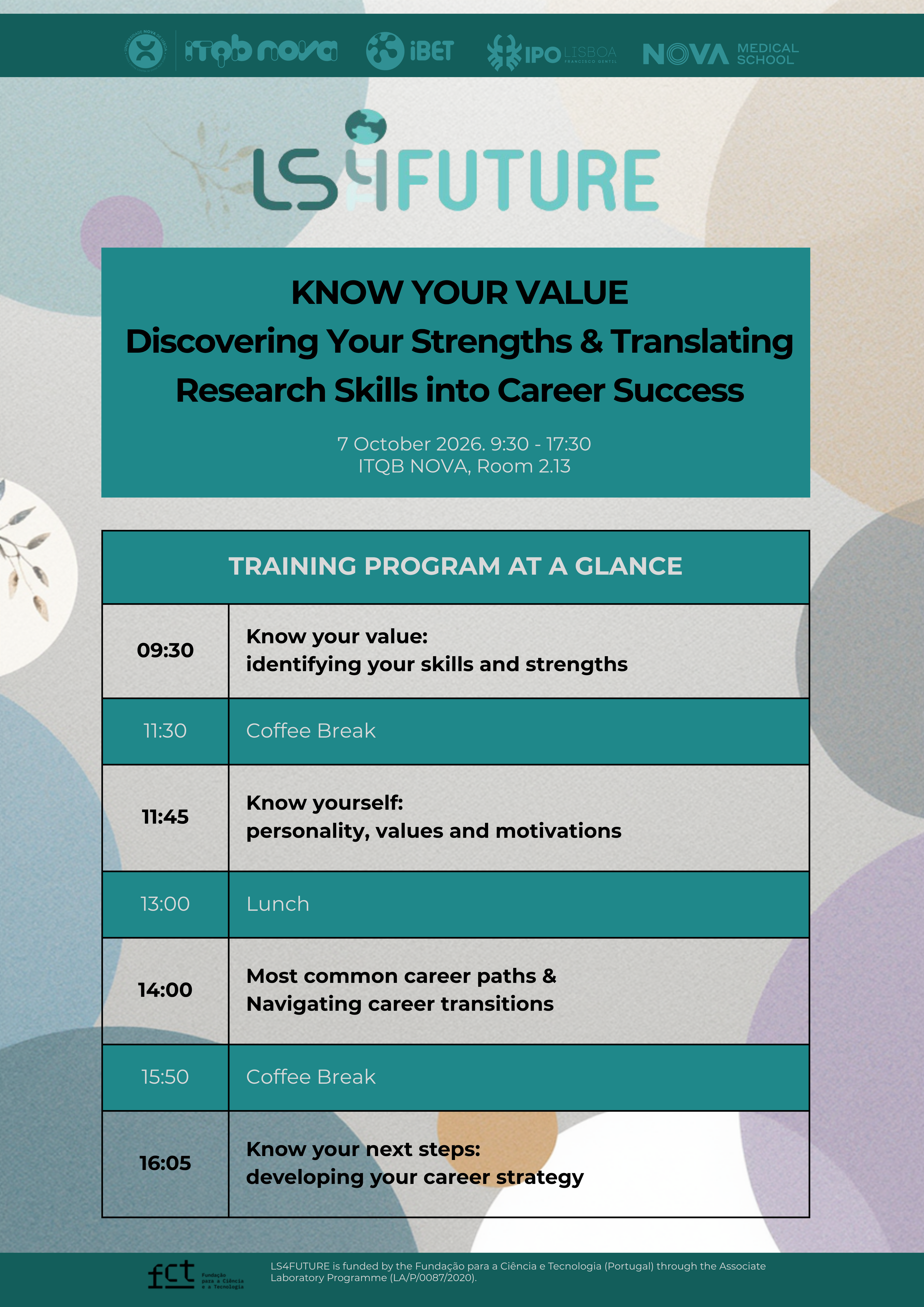
Click right on the image to see the full progam
Researchers develop an exceptional range of technical, analytical and interpersonal skills throughout their PhD and postdoctoral training. However, many struggle to recognise the full value of these competencies, articulate them confidently, or apply them when making career decisions.

For that reason, LS4FUTURE has prepared a series of workshops designed to help early‑career researchers find the right path for themselves and succeed in getting there.

The first of this series is a full-day interactive workshop, designed to help you develop greater self-awareness, identify and communicate your strengths, and confidently navigate career transitions within and beyond academia.

Through a combination of self-assessment, reflection, peer coaching, discussion and practical exercises, you will explore how your research experience has shaped your transferable skills, values, motivations and career aspirations.

The workshop emphasises that successful career development begins with understanding oneself and provides participants with practical tools to make informed career decisions, build professional networks and develop an actionable career development plan.

By the end of the day, you will have greater confidence in the value  you bring as researcher and a clear strategy for your next career transition.

WHEN:

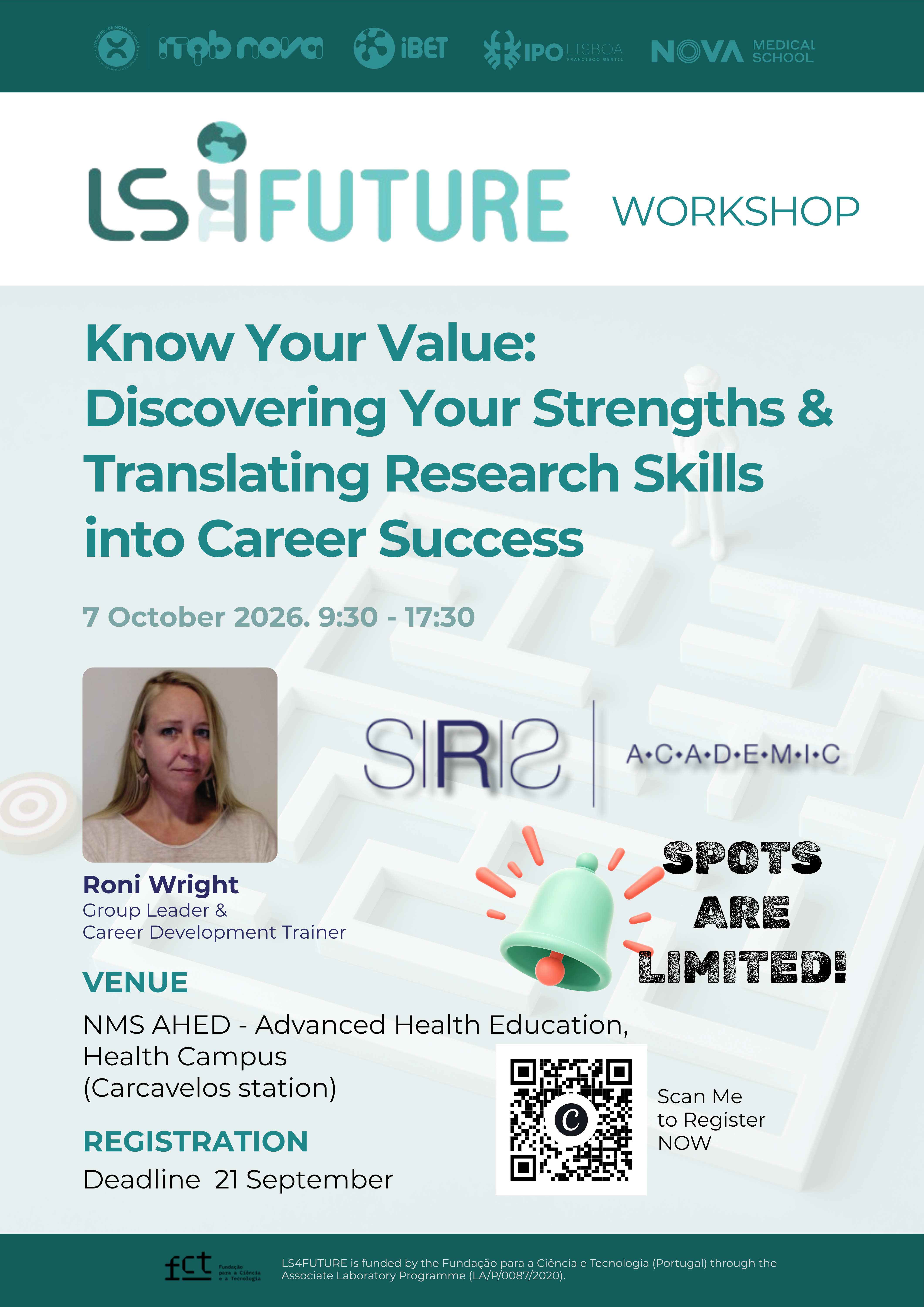
7th October, from 09:39 to 17:30. Lunch won’t be provided. However, there is a canteen, as well as fridges and microwaves if you want to bring your own food.

WHERE:

ITQB NOVA, Classroom 2.13.

As a PhD student or postdoc, weighing a move outside academia can feel genuinely intimidating.

Researchers are rarely taught how to translate years of technical, analytical and interpersonal skill-building into language that resonates with employers, or how to evaluate options beyond the paths their supervisors and peers have taken.

During this workshop you will map your own research experience onto a personal Researcher Skills Map, running a DISC self-assessment to understand how you’re wired to work and decide. You will also have a chance to exchange with your peers and learn about each other’s experiences in this professional transition.

You will leave with a concrete, personalised Individual Development Plan, actionable goals and next steps you can act on within the next months, as well as a small network of peers who are navigating the exact same journey.

By the end of the day, you won’t just feel less alone in the uncertainty. You’ll have a clearer picture of what you bring to the table, and an actual plan for what comes next.

LEARNING OUTCOMES

By the end of the workshop, participants will be able to:
● Recognise and articulate the transferable skills developed through research training.
● Identify their personal strengths, values, motivations and preferred working environments.
● Evaluate career options based on personal priorities rather than assumptions or external expectations.
● Develop greater confidence in communicating their skills and professional value.
● Apply practical strategies for navigating career transitions within and beyond academia.
● Build and strengthen professional networks through effective networking and mentoring approaches.
● Create a personalised Individual Development Plan (IDP) with clear short- and medium-term career goals.
● Leave with practical tools and increased confidence to proactively manage your own career development.

TAKEAWAY RESOURCES

Participants will receive a suite of practical resources designed to support continued career development beyond the workshop:
1. Know Your Value → Researcher Skills Translator worksheet to help identify and communicate transferable skills developed through research.
2. Know Yourself → DISC personality profile summary and Values & Motivators worksheets to support ongoing self-reflection and career decision-making.
3. Navigate Your Transition → Networking & Mentoring Action Plan to help participants build meaningful professional relationships and identify opportunities for career growth.
4. Know Your Next Steps → Career Planning Worksheet and Individual Development Plan (IDP) to define career goals, identify development priorities and create a personalised action plan.

ADDITIONAL RESOURCES INCLUDE:

Sample academic and non-academic CVs.
A curated list of recommended career development resources, including websites, books, podcasts and career planning tools.

TRAINER

Dr. Roni Wright, Group Leader & Career Development Trainer.

Roni Wright holds a PhD in Molecular Biology from the University of Glasgow. She is currently a group leader and Professor at the Universitat Internacional de Catalunya (UIC) in Barcelona. Besides her experience as a researcher and scientist, Roni also has extensive experience facilitating workshops and courses on different skills, especially on Career Paths and Career development. She has specialized in supporting the advancement and growth of PhD, Postdocs and Group Leaders in STEM.

PROVIDER COMPANY

SIRIS Academic is the partner supporting LS4FUTURE in the design and development of this career development training.

SIRIS is a consulting company with extensive expertise in higher education, research and innovation. Its team members are mostly PhDs or former academics specialised in supporting the strategic planning of projects in these areas.

https://www.sirisacademic.com/

Researchers develop an exceptional range of technical, analytical and interpersonal skills throughout their PhD and postdoctoral training. However, many struggle to recognise the full value of these competencies, articulate them confidently, or apply them when making career decisions. Therefore, this training programme has been designed in direct response to needs identified by the LS4FUTURE team, to complement and broaden existing academic career support with professional opportunities beyond academia.

REGISTRATIONS

Free, but mandatory.

SPOTS ARE LIMITED,

secure yours now! Click here to register.

The deadline for registration is 21st September, unless the maximum number of participants is reached earlier. In that case, you will be placed on the waiting list (and yes, spots do tend to open up!)